

Last Updated: August 2026
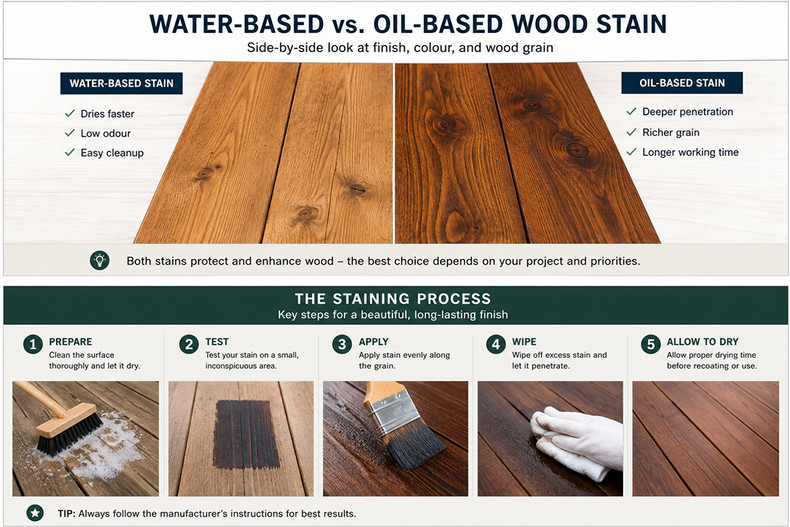
If you're deciding between water-based vs. oil-based wood stain, the best choice depends on your project—not on one product being universally superior.
Water-based stains dry faster, produce less odour, clean up with soap and water, and have become incredibly durable thanks to advances in coating technology. Oil-based stains penetrate deeper into porous wood and remain a favourite for older decks, fences, and projects where a rich, natural grain is the priority.
For most homeowners, both types can provide years of protection when properly applied and maintained. The key is matching the stain to your wood, environment, and project goals.
Key Takeaways
-
Water-based stains dry faster and are easier to apply in a single day.
-
Oil-based stains generally penetrate deeper into porous or weathered wood.
-
Both can provide excellent durability when high-quality products are used.
-
Water-based stains produce fewer VOCs and are easier to clean up.
-
Oil-based stains often create a richer, warmer appearance on natural wood.
-
Proper preparation and maintenance have a greater impact on longevity than whether a stain is oil- or water-based.
Quick Comparison
| Feature | Water-Based | Oil-Based |
|---|---|---|
| Dry to Touch | 1–3 hours | 6–12 hours |
| Recoat Time | 2–4 hours | 12–24 hours |
| Cleanup | Soap & Water | Mineral Spirits |
| Odour | Low | Strong |
| VOC Emissions | Lower | Higher |
| Grain Enhancement | Very Good | Excellent |
| Colour Stability | Excellent | May Amber Slightly |
| Best For | Furniture, Cabinets, Interior Projects, Quick Turnaround | Older Decks, Fences, Exterior Wood, Deep Grain Appearance |
What Is a Water-Based Wood Stain?
Water-based wood stains use water as the primary carrier for pigments and binders. As the water evaporates, the stain cures and leaves colour within the wood while allowing the grain to remain visible.
Today's premium water-based stains perform far better than early formulations, offering excellent colour retention, UV resistance, and durability with significantly shorter drying times.
Best For
-
Interior furniture
-
Cabinets
-
Trim
-
Doors
-
New decks
-
DIY homeowners wanting quick project completion
Pros
-
Fast drying
-
Easy cleanup
-
Lower odour
-
Lower VOC emissions
-
Excellent colour retention
-
Minimal yellowing over time
Cons
-
Can raise the wood grain slightly
-
Shorter working time during application
-
May require a light sanding between coats on some species
What Is an Oil-Based Wood Stain?
Oil-based stains use oils and solvents to carry pigments deeper into the wood fibres before curing.
Because they soak farther into porous wood, they're often preferred for restoring weathered cedar decks, fences, and other exterior projects.
Best For
-
Older decks
-
Cedar fences
-
Exterior structures
-
Rustic finishes
-
Projects where maximum grain enhancement is desired
Pros
-
Deep penetration
-
Rich appearance
-
Longer open time during application
-
Excellent grain definition
Cons
-
Longer drying times
-
Stronger odour
-
Mineral spirits required for cleanup
-
Higher VOC emissions
Which Stain Lasts Longer?
Neither automatically lasts longer.
The lifespan of any stain depends on:
-
Surface preparation
-
Product quality
-
UV exposure
-
Moisture
-
Wood species
-
Application method
-
Maintenance schedule
A premium water-based stain applied correctly can easily outperform a lower-quality oil-based product.
Likewise, an oil-based stain maintained regularly can last for many years.
Which Looks Better?
If your goal is emphasizing the natural beauty of wood grain, oil-based stains generally produce a deeper, warmer appearance.
Water-based stains, however, maintain truer colours over time and resist yellowing, making them an excellent choice when colour accuracy matters.
The difference is most noticeable with transparent finishes. Semi-solid and solid stains tend to minimize visual differences between the two.
Which Is Better for Metro Vancouver's Climate?
In Metro Vancouver, wood is exposed to frequent rainfall, damp winters, and periods of intense summer UV.
That combination makes proper preparation, application, and maintenance more important than choosing oil or water alone.
Western Red Cedar—commonly used for decks and fences throughout the Lower Mainland—performs well with both systems when the wood is clean, dry, and stained according to the manufacturer's recommendations.
Which Should You Choose?
Choose Water-Based Stain if you want:
-
Fast project completion
-
Easy cleanup
-
Lower odours
-
Better colour retention
-
Easier maintenance
-
Interior furniture or cabinetry
Choose Oil-Based Stain if you want:
-
Rich natural appearance
-
Deep penetration
-
Longer working time
-
Older weathered exterior wood
-
Maximum grain enhancement
Our Recommendation at Hue & Hammer
One of the biggest misconceptions we hear is that oil-based stain is always "better."
In reality, the best stain depends on the condition of the wood, previous coatings, exposure to weather, and the finish you're trying to achieve.
We've seen beautiful, long-lasting results from both water- and oil-based systems. Rather than choosing based on tradition alone, we recommend selecting a quality product that's appropriate for your specific project and following the manufacturer's preparation and maintenance instructions.
If you're unsure, bring us a photo—or even a small offcut of your wood—and we'll help you choose the right product.
Common Questions
Is water-based stain waterproof?
No. Wood stains help repel moisture but are not completely waterproof. Periodic maintenance is still required to protect wood from weathering.
Does oil-based stain penetrate deeper?
Generally, yes. Oil-based stains tend to soak further into porous wood, particularly older or weathered lumber.
Which dries faster?
Water-based stains typically dry within a few hours. Oil-based stains usually require overnight drying before recoating.
Which is easier for beginners?
Water-based stains are often easier for DIY users because they dry quickly, clean up with water, and produce less odour. The trade-off is a shorter working time, so it's important to apply them evenly and avoid overbrushing.
Which is better for cedar?
Both perform well on cedar.
Oil-based stains often produce a richer appearance on older cedar, while water-based stains offer excellent colour retention and easier cleanup.
Can I apply water-based stain over oil-based stain?
Not usually without proper preparation.
If an existing oil-based finish is still intact, a water-based product may not adhere properly. Clean the surface thoroughly, remove loose or peeling finish, sand if needed, and always follow the manufacturer's recommendations. When in doubt, test a small inconspicuous area first.
Which has fewer VOCs?
Water-based stains generally contain fewer volatile organic compounds (VOCs), making them a popular choice where lower emissions or easier indoor application are priorities.
Common Mistakes to Avoid
Even the best stain won't perform well if it's applied incorrectly.
Avoid these common mistakes:
-
Staining damp wood
-
Skipping surface cleaning
-
Applying stain in direct sunlight
-
Applying too much stain
-
Not testing the colour on a small area first
-
Ignoring the manufacturer's drying and recoating times
-
Forgetting routine maintenance after installation
Decision Guide
| If your priority is... | Recommended Choice |
|---|---|
| Fast drying | Water-Based |
| Easy cleanup | Water-Based |
| Low odour | Water-Based |
| Rich grain enhancement | Oil-Based |
| Older weathered deck | Often Oil-Based |
| Indoor furniture | Water-Based |
| Cedar fence | Either |
| New deck | Either (depending on desired finish) |
| DIY simplicity | Water-Based |
Final Thoughts
There's no single "best" wood stain.
Modern water-based stains have closed much of the performance gap that once separated them from traditional oil-based products. At the same time, oil-based stains remain an excellent option for certain exterior projects where deep penetration and grain enhancement are priorities.
Instead of choosing based on old assumptions, choose the stain that matches your wood species, your environment, and the results you want to achieve.
If you're not sure which direction to go, the team at Hue & Hammer is always happy to help.
References
-
Government of Canada. Volatile Organic Compounds (VOCs). https://www.canada.ca/en/environment-climate-change/services/managing-pollution/sources-industry/volatile-organic-compounds.html
-
U.S. Environmental Protection Agency. Volatile Organic Compounds' Impact on Indoor Air Quality. https://www.epa.gov/indoor-air-quality-iaq/volatile-organic-compounds-impact-indoor-air-quality
-
USDA Forest Products Laboratory. Wood Handbook: Wood as an Engineering Material. https://www.fpl.fs.usda.gov/products/publications/specific_pub.php?posting_id=18231